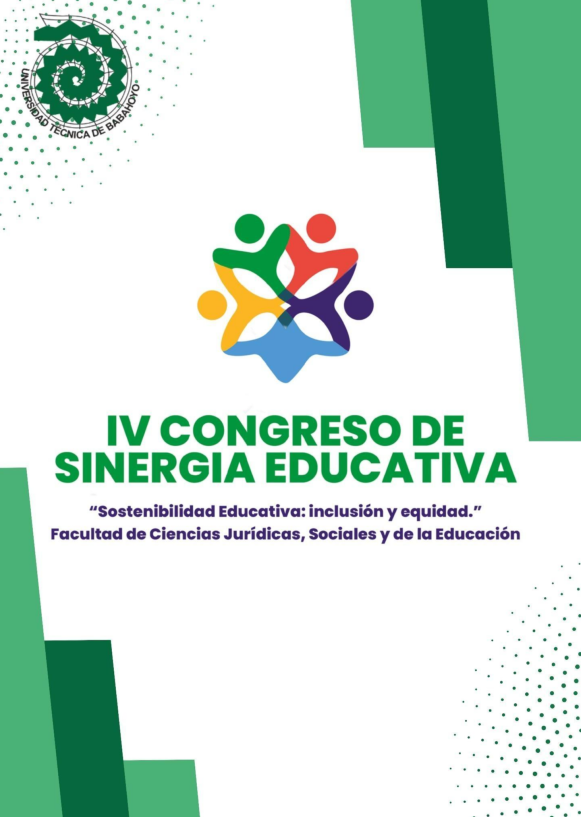
Estrategias de adaptación curricular en segundo grado para estudiantes con necesidades educativas especiales.
Additional Files
Abstract
This paper addresses the importance of curriculum adaptation strategies in second grade as a fundamental part of inclusive education in the Ecuadorian context. These strategies respond to the legal framework established by the Organic Law on Intercultural Education (LOEI) and the regulations of the Ministry of Education, which promote respect for diversity and guarantee the rights of students with special educational needs (SEN). Curricular adaptations are classified into two types: access, aimed at facilitating student participation through adjustments to the physical environment, teaching resources, and media; and curricular adaptations, which can be non-significant (methodological or assessment modifications that do not alter the learning objectives) or significant (adjustments to content and objectives, adapted to the student's level and pace). In second grade, the implementation of concrete and visual resources, multisensory teaching strategies, short and structured activities, the use of pictograms, collaborative work, and personalized support are suggested. These actions must be articulated within an Individual Support Plan (ISP), developed jointly by the DECE (Department of Education), teachers, families, and other involved specialists. The importance of continuous, formative, and flexible assessment that responds to individual progress is also highlighted. The implementation of these strategies not only promotes the learning of students with special educational needs, but also strengthens an inclusive, empathetic, and nurturing environment for the entire educational community.
##plugins.themes.default.displayStats.downloads##
References
Arnaiz, P. (2012). La educación inclusiva: principios y prácticas. Universidad de Murcia.
Asamblea Nacional del Ecuador. (2011). Ley Orgánica de Educación Intercultural (LOEI).
Ministerio de Educación. (2013). Lineamientos para la Educación Inclusiva. Quito, Ecuador.
Ministerio de Educación. (2020). Programa Educación Sin Barreras. Quito, Ecuador.
Pujolàs, P. (2014). Aprender juntos, alumnos diferentes. Editorial Graó.
Serrano, A. (2010). Educación inclusiva y atención a la diversidad. Editorial Narcea.
UNESCO. (2020). Guía para la educación inclusiva en América Latina y el Caribe.
UNICEF. (2018). La familia y la comunidad en la inclusión educativa. Santiago de Chile.
Published
How to Cite
Issue
Section
License
Copyright (c) 2025 Journal of Science and Research: Revista Ciencia e Investigación

This work is licensed under a Creative Commons Attribution-NonCommercial-NoDerivatives 4.0 International License.
Los autores mantienen los derechos sobre los artículos y por tanto son libres de compartir, copiar, distribuir, ejecutar y comunicar públicamente la obra bajo las condiciones siguientes:
Reconocer los créditos de la obra de la manera especificada por el autor o el licenciante (pero no de una manera que sugiera que tiene su apoyo o que apoyan el uso que hace de su obra).
No utilizar esta obra para fines comerciales.
Declaración de privacidad
Los nombres y direcciones de correo-e introducidos en esta revista se usarán exclusivamente para los fines declarados por esta revista y no estarán disponibles para ningún otro propósito u otra persona.


.JPG)





.png)